
Sustainble Uniform Project in Derbyshire
Bringing British Wool to British Classrooms.
In the UK it is found that up to 1.4 million school uniforms, many of which could be reused, are thrown away every year. And because many of the garments contain high levels of polyester, that equates to around 350 tonnes of plastic in landfill.[1] “
Over the last 20 years I have carefully curated a synthetic free hand made wardrobe and when my children started school I didn’t want that approach to change. I searched high and low for cotton uniform alternatives they were slowly removed from the market, didn’t fit well or very expensive so I ended up making my own organic cotton uniform for our children.
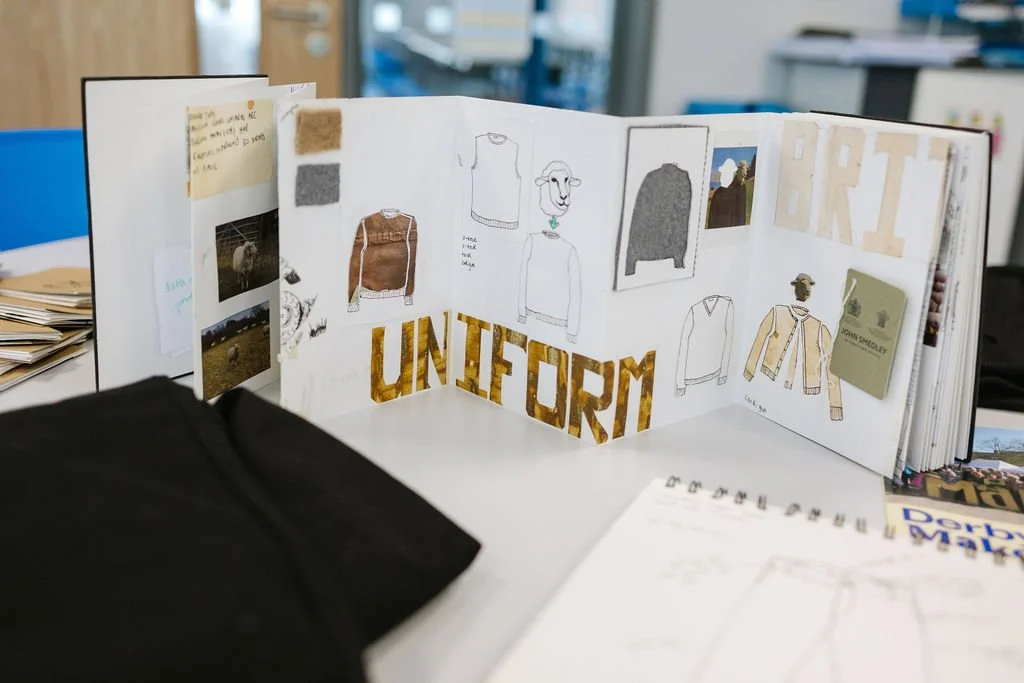
As a textile artist and activist I work across Derbyshire primary and secondary schools where there is a significant textile skills gap. I meet textile tutors that no longer have enough interested students to run a GCSE textile class, schools with empty and unused textile equipment . Where 8 year old’s don't know how to tie a knot and 16 year old GCSE students who don't know that wool comes from sheep
I created the sustainable uniform project to address the skills gap with the students I meet and enable their uniform to be made in plastic free, British wool as the children learn to create their own piece of school uniform.
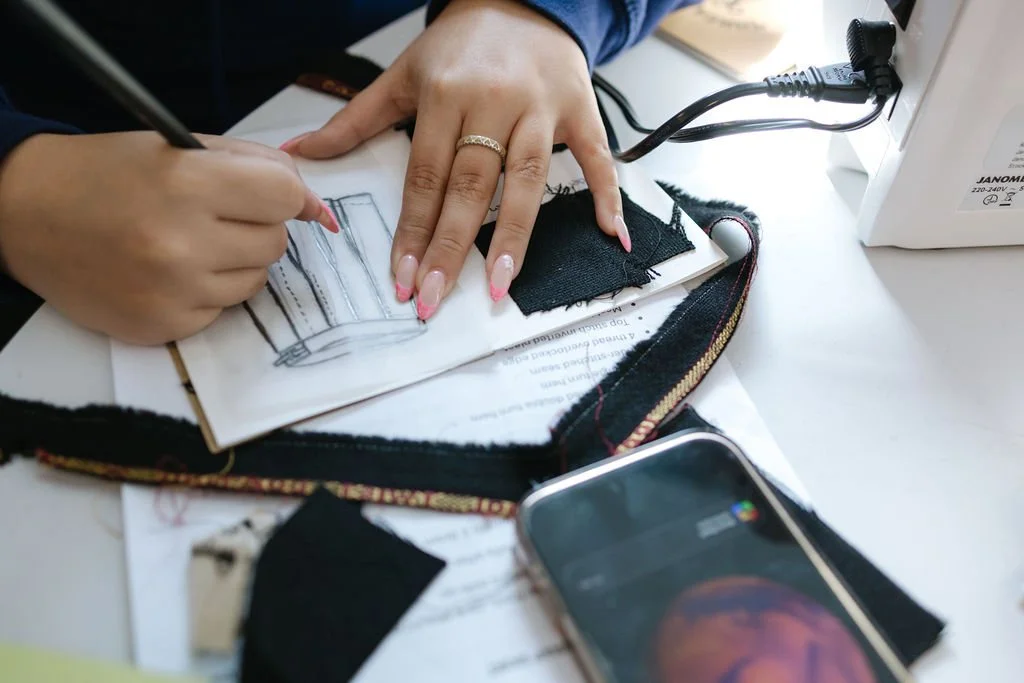
Over the project students learn how to read a pattern, handle and cut the fabric pieces, machine skills, overlocking and hand finishing.
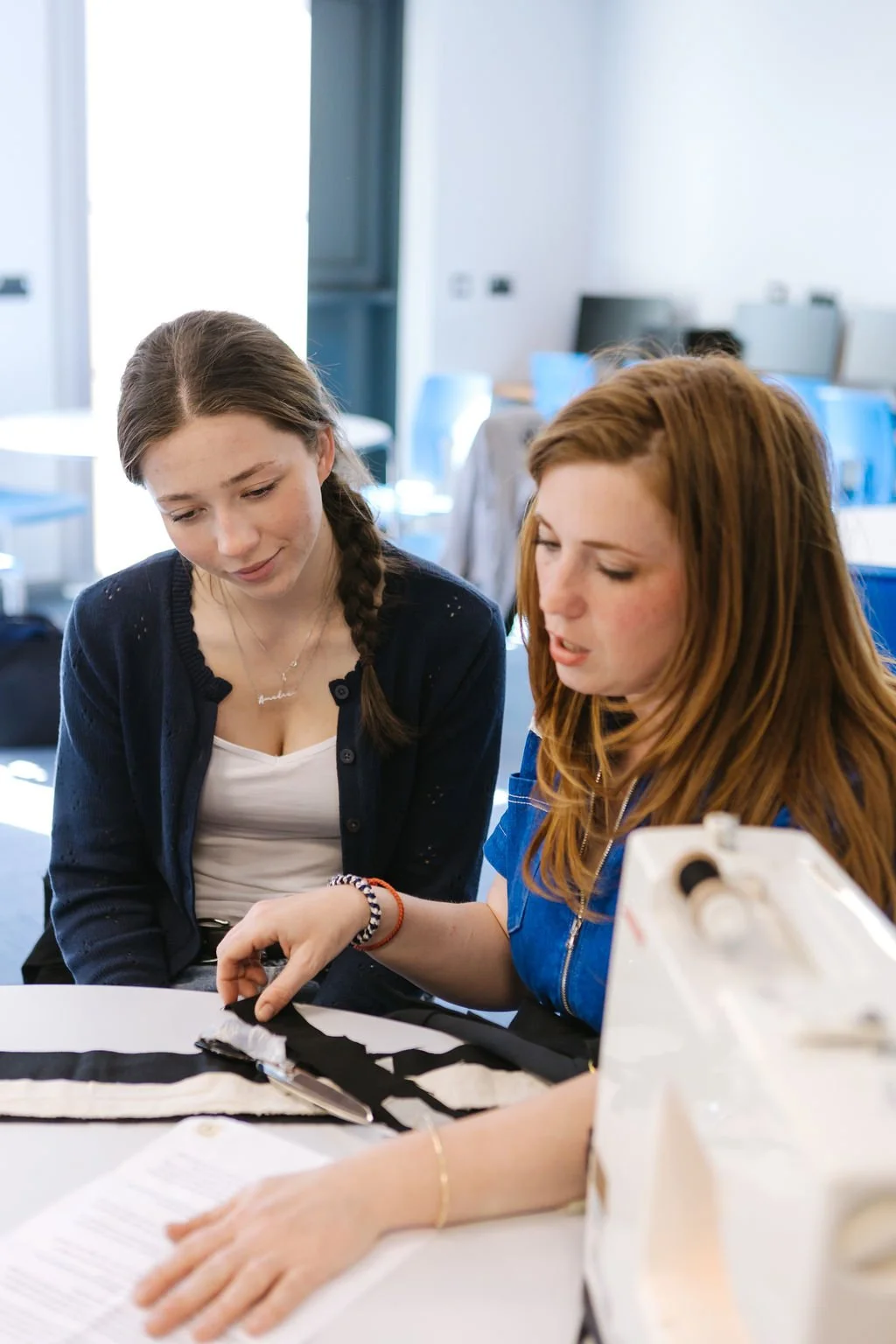
This project took place at Heanor Gate Spencer Academy where 18 Year 12 students voluntarily signed up and attended out of school’s hour sessions. With the support of retired textile tutor Jan Bradshaw and the nurturing admin powerhouse that is HG school staff.
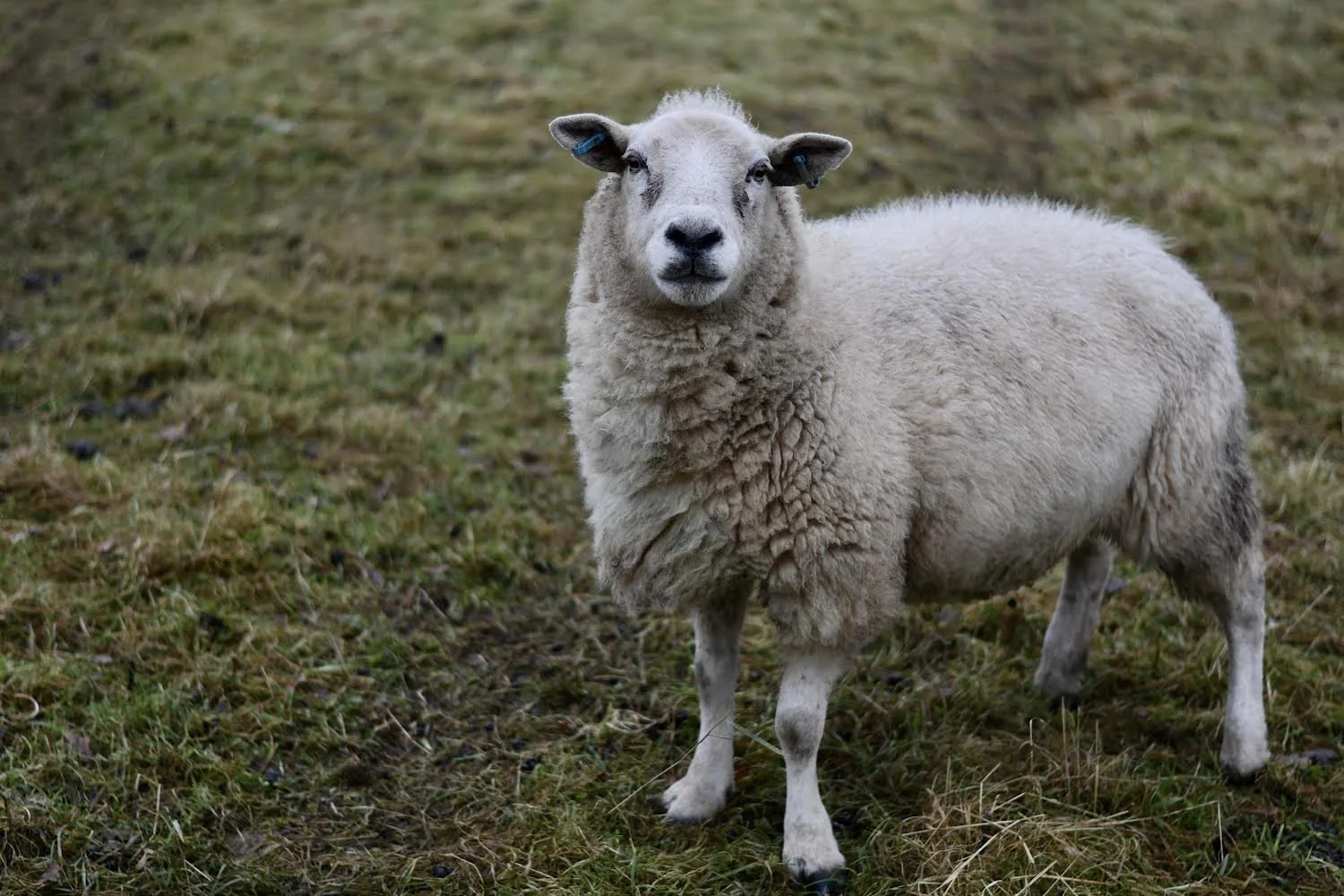
Using British wool to make the uniform was core to the heart of the project mission. Reconnecting Derbyshire school students with Derbyshire sheep farmers. Richard Spencer a 5th generation sheep farmer in Ashbourne and British Wool Board Rep presented to the students on the realities of sheep farming in the UK, how it's evolved over the last five decades, how British wool’s identity in the commodity market and wider context of fast fashion has changed.
Very few students had any experience sewing as GCSE textiles is not currently on the school curriculum.
Students feedback was the most enjoyable part of the project was learning textile skills such as; pleat construction, using an overlocker and making new friends. With students giving the project an average score of 4.8 out of 5 stars. The students at HG are a delight to teach, so motivated and willing to learn about a subject that wasn’t in their schoolwork.
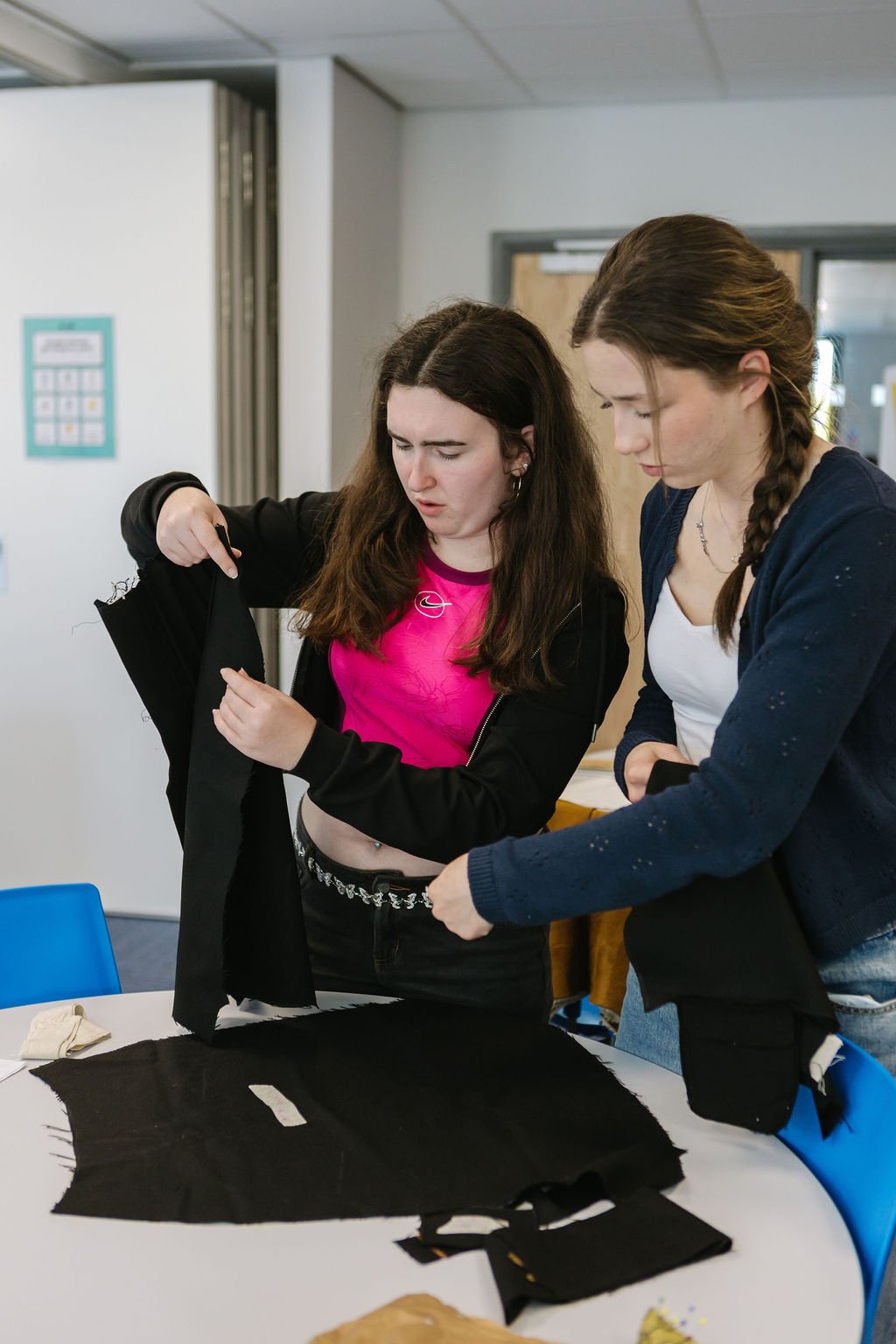
A special mention to students Rosie and Ameile who both spoke publicly at the Heanor Hub festival about how they found the project and their reflections on British wool and its environmental impact compared with the synthetic uniform counter parts. They joined Richard and several fashion industry experts on a panel discussion ‘‘is fashions future rooted in its past?’. They articulated themselves beautifully and should be proud of what they learnt and achieved within 6 weeks.
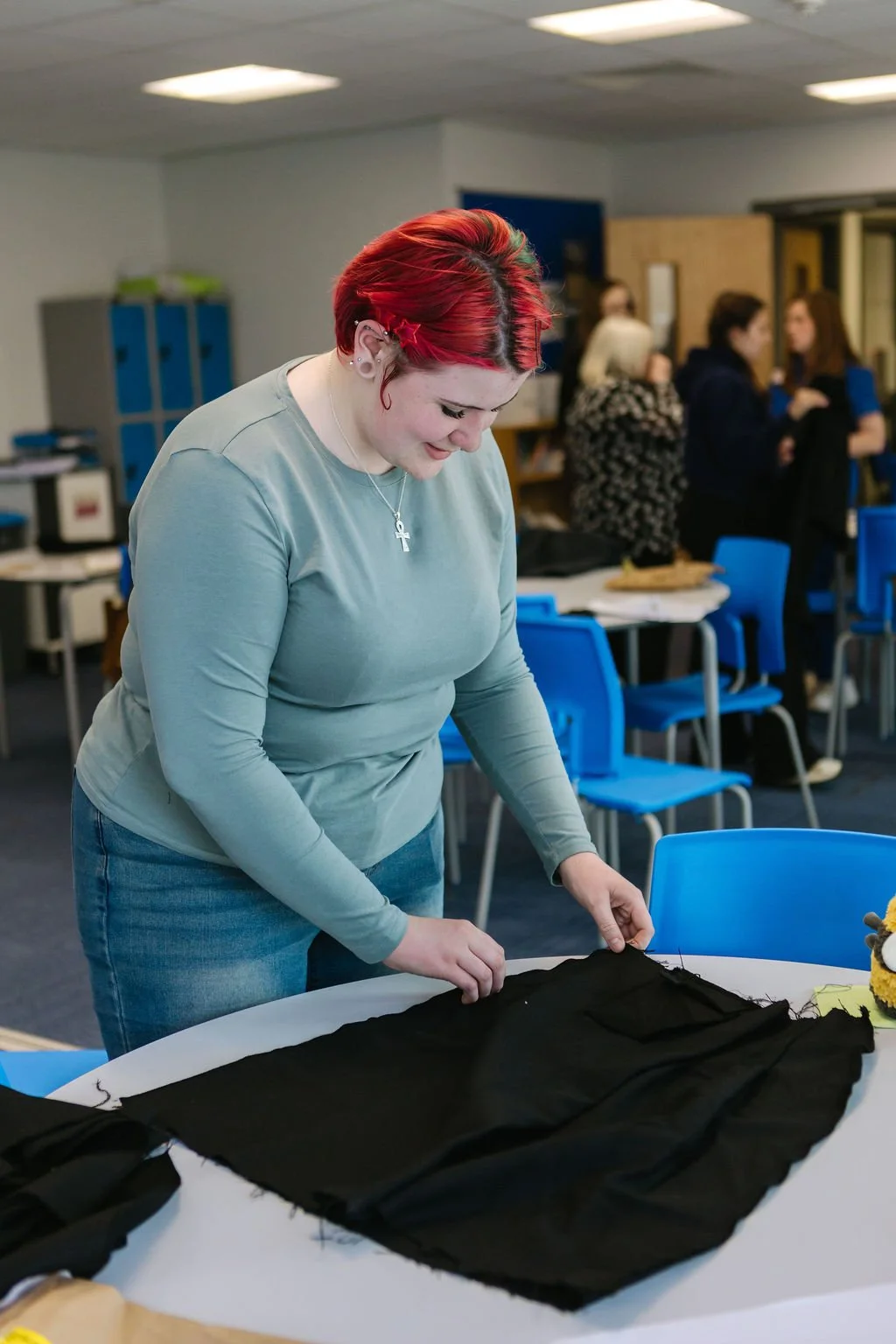
The Teaching staff commenting that “the project gave their students such a unique opportunity to be part of a brilliant project inspiring a real love for sewing in their students a special pleasure to be part of Abigails uniform project”.
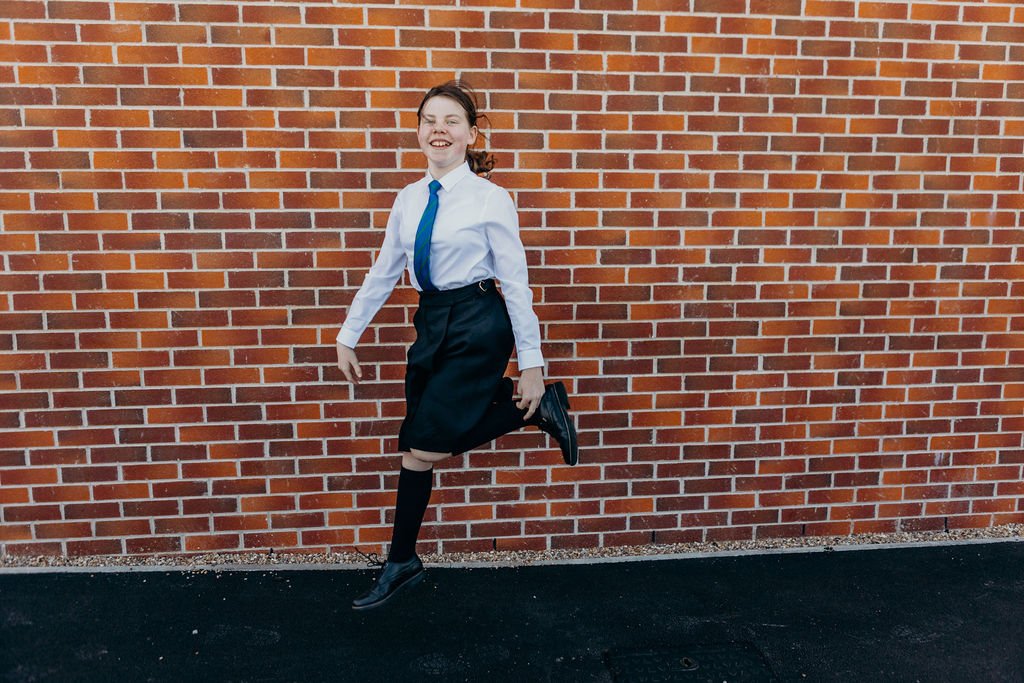
Daisy our fabulous model wearing the students made British Wool pleated skirt.
The garments they made were almost entirely home compostable, made with 100 British wool fabric that was woven in Britain, GOTS thread, buttons made from corozo nuts, GOTS canvas interlining and digitally embroidered badge with cellulose threads, only the brass d-rings that can’t be composted and would have to be cut out a recycled at the garments end of life.
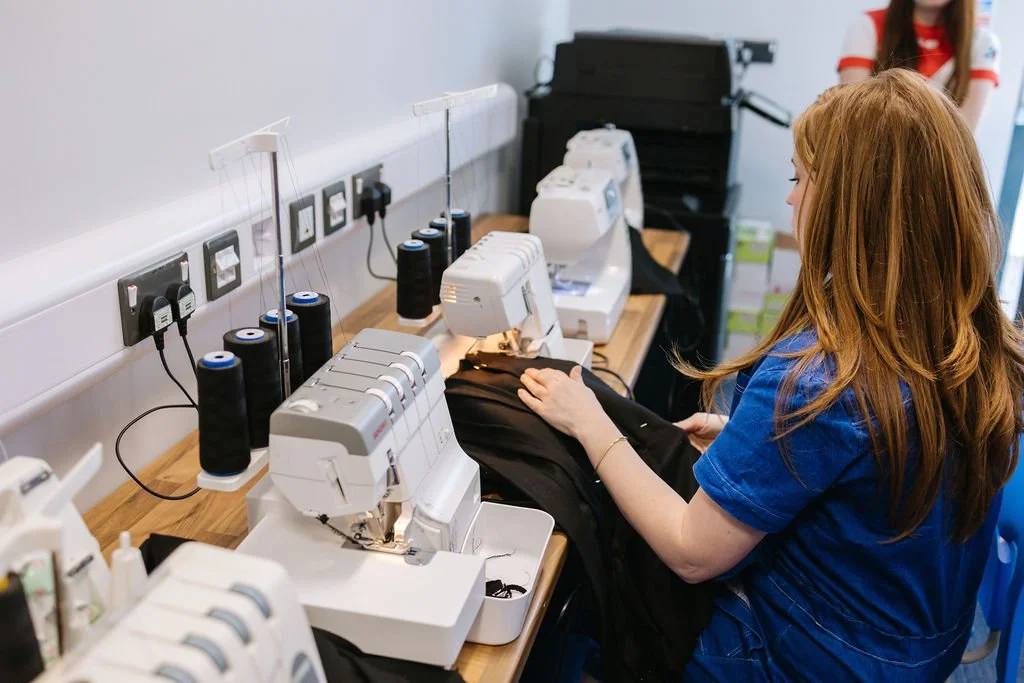
This project wouldn’t have been possible without the financial support of Derbyshire Makes and Make shift.




With thanks to our partners at Janome for technical and equipment support.

[1] https://news.sky.com/story/families-urged-to-reuse-or-recycle-school-uniform-to-save-cash-and-cut-down-on-350-tonnes-of-plastic-ending-up-in-landfill-every-year-12632296#:~:text=%22So%20if%20you%20take%20a,when%20the%20child%20outgrows%20them.